Chef

I’ve learned a lot from watching cooking shows. More than simply how to cook, that is. There are so many reasons I’m drawn to them. I enjoy watching people use their hands. Most especially to create or build or fix or heal. All four of which are a part of preparing a good meal.

Great chefs understand that cooking is soul work. Sure, there are some ornery bastards. Some colossal egos. Tempers flare. I’ve never known any creative area where these issues didn’t arise. More often, what amazes me about the community of chefs is the way they collaborate. And while they may be highly critical, most also seem willing to submit their own cooking to the same scrutiny.

Cooking is hard work; busy, relentless, and consuming. You have to maintain your health, keep your energy levels high, and commit your whole self to the process.

Master chefs have a devotion to growth, learning, experimentation, and change. They fail and head right back to the pantry. It seems that each of them had a devastating setback in their lives; a fire, cancer, bankruptcy, a second fire; and yet, they persist. In fact, most chefs mark these traumatic events, that might have taken the heart of others, as a catalyst for transformation. You could say that they discovered their unique genius only after, or because of, a personal catastrophe.

Lately, an acute attention and appreciation for the local environment play a key role in fine cuisine. I deeply admire the move to incorporate not only local farms and produce, but to explore and forage, with respect and restraint, our seas, meadows, and forests. The artistry with which they incorporate these natural elements is, often times, astonishing. It also strikes me as ancient and witchy.

Cooking is an intriguing mix of science, art, skill, and attention. An alchemy of the senses. But, a crucial, though often unnamed component of cooking is time. Time and I are often at odds. Usually this is when I am ruminating on the past, or anxious about the future, or freaking out because it is passing so doggone quickly. Never is this more apparent than when I try to make an egg. I know first hand why this is the magical test of most chefs. You have to have ALLLLL your shit together to prepare a proper egg. And then it is a focused dance for the following three minutes or so. Artists create egg dishes with effortless elegance and keep a tidy kitchen, to boot. Not so in my kitchen.

The Zen Buddhist nun, Jeong Kwan, uses time expertly in preparing her temple food. Kimchi is created and harvested precisely when most nutritious and delicious. She plans and prepares healing vegan meals according to the seasons and cycles of her temple surroundings.  She then presents them with exquisite artistry.  We could all learn from her generous, humble offering.

In one way or another, I see great chefs as examples of mindful living. They are beholden to the gifts bestowed in their home place and as interpreted through the work of their senses, imagination, and hands. This is a calling. A calling that all of us have the opportunity to answer and practice on a daily basis. We can demonstrate our love for others and this beautiful, bountiful world by cooking healthy, tasty, well planned and attentively prepared food.
Chef
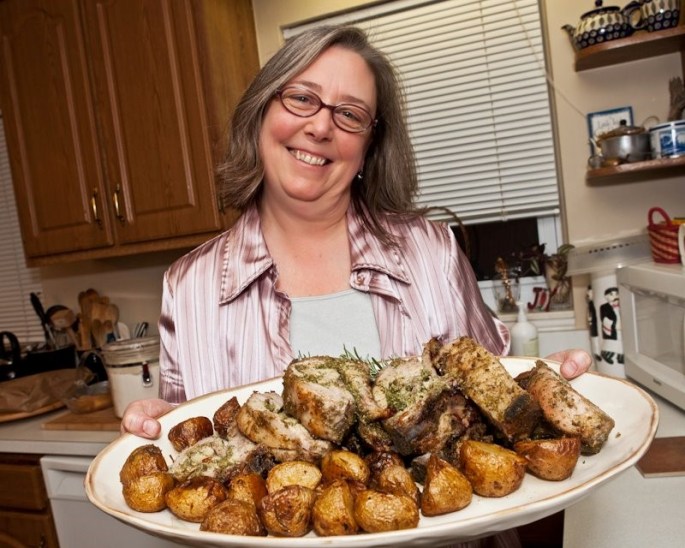
One of my favorite chefs as photographed by: John Hardwick

Explore

22450356142_5b9f24862c_k
Photo by: MagsBlackDetroit

This may sound weird but all my life I have regularly given myself assignments. OK. Maybe not so weird for someone who ended up becoming a teacher but when I say assignments, I am not talking about the traditional kind. I’ve assigned myself tasks like, get to know every tree in my neighborhood. What are their names? What have they witnessed? Who lives in them? What about them is edible? This has been an ongoing assignment from the age of seven actually.

ray and vivienne
Vivian and Ray Kell center. Sandwiched by Mary and Jerry Black

Another mission I gave myself was to make friends with an elder in my community. I chose Ray Kell and by proxy his wife Vivian. Ray is 91 years old now. Vivian is 90.  I have called them my friends since they were in their early 70’s. Ray and Vivian have ten children, 33 grandchildren, 17 great grandchildren and counting. Ray is a veteran of World War 2. He and Vivian are activists for peace, justice, and equality. He plays the piano and sings at least an hour every day. Preferably more. Sometimes you have to beg him to stop. He still plays 18 holes of golf and carries his own clubs. When he was 84, Ray raced me up five flights of stairs and beat me. The Kell’s vegetable garden is spectacular and feeds many in their neighborhood. They work every Monday from 6:00AM until 1:00PM in the Manna Meal Soup kitchen. Every year for the past 20, he and Vivian pack up their car and travel the country for six weeks visiting all their kids and grand kids while camping. In a tent! On Ray’s 90th birthday he challenged himself to do a freestanding headstand and hold it. He achieved his goal in the middle of his daughter’s backyard while his grandson played a three minute waltz on the violin. I guess you could say Ray also gives himself assignments. He certainly lives a life of meaning, purpose, and intention and I aspire to be more like him.


explore
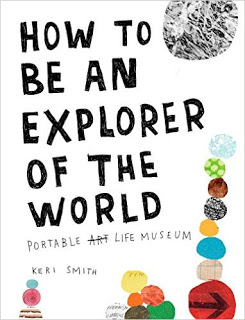
Keri Smith’s Beautiful Book.

Which might be why I regularly assign myself reading. Two Summers ago,  I read How to Be an Explorer of the World  by Keri Smith. And guess what?! The book is filled with interesting assignments, only she calls them explorations. I highly recommend it. The author challenges you to collect tiny things and make a mini museum in an Altoids tin. She suggests making sculptures out of ten things you find in a drawer. There are 59 different explorations. Most of them involve field work. Keri Smith offers 5 field work tips. I would like to add a sixth one based on personal experience and follow it up with ten explorations, not in the book, that I found made my life, and occasionally the lives of those around me, better.

Keri Smith’s Field Work Tips:
  1. Never leave home without a notebook and pen.
  2. When practicing deep looking or deep listening, it is best to work alone.
  3. Respect the community in which you explore. This applies to all aspects of nature, human or otherwise and also includes property, public or private
  4. If you find yourself being questioned as to the reasons for your activities, the phrase, “I’m conducting research” usually satisfies the nosiest interloper.
  5. Expect the unexpected and you will find it.
My 6th Tip: You can never have too many pockets when exploring. Be sure to bring scissors, zip lock bags, looking glasses, a camera, a snack and water bottle, some tissue, and plan to stay out a long time.
10 of my own Recommended Explorations Not Listed in the Book:

1. Never pass up an opportunity to dip, dive, slide, swing, glide, skip, twirl, rock, or dunk.

2. Look for the color purple everywhere you go. Read The Color Purple by Alice Walker. Pay Attention to what Shug says. “Shug a beautiful something.”

3. For an entire day, if anyone asks you a question, sing the answer. Make note of the questioner’s reaction.
4. Discover your favorite apple. They don’t all taste the same. Mine is a Fuji. Try one with some extra sharp Pinconning cheese. Seriously. Try that.
5. Listen only to the voice of love inside your head for a whole morning, or a whole day. Keep practicing until you can do it for longer and longer times.  If the mean voice starts talking, sing “Twinkle Twinkle Little Star” to yourself until it goes away.
6. Every once in awhile, make yourself an omelet.
7. Find an interesting elder in your community. Get to know them. Ask them questions. Listen to their stories.
8. Make your worst enemy a kindness salad…or a batch of yummy cookies. Again, make note of their reaction.
9. Dance in the grocery store.
10. For one moment each day, stand still where you are. Breathe into your belly. Be mindful that every day, every single day, even the heart crushing ones, we are surrounded by the mighty love of God.